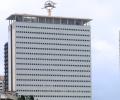
Maharashtra government on Wednesday decided to acquire the iconic Air India building at Nariman Point in Mumbai for Rs 1,601 crore. The decision was taken at a meeting of the state cabinet in Mumbai. The meeting, chaired by Chief Minister Eknath Shinde, also decided to waive off around Rs 250 crore unrealised income and interest on the property, an official said.

While the leadership issues may get sorted in the upcoming board meetings of Tata Trusts and Tata Sons, listing of the holding company of the Group on stock exchange should potentially resolve the bigger question on ownership and control

'The next two to three weeks will not be decided in Washington.' 'They will be decided in Tehran, in whatever calculation Iran makes about the costs of continued resistance against the costs of appearing to have yielded.'

The government on Monday issued a letter of intent (LoI) confirming the sale of its 100 per cent stake in loss-making Air India to Tata Group for Rs 18,000 crore, a senior official said. Last week, the government had accepted an offer by Talace Pvt Ltd, a unit of the holding company of salt-to-software conglomerate, to pay Rs 2,700 crore in cash and takeover Rs 15,300 crore of the airline's debt. Subsequent to that, an LoI has now been issued to Tata confirming the government's willingness to sell its 100 per cent stake in the airline.

As the Tata group inches closer to taking over Air India in January 2022, the $242-billion conglomerate will also inherit a stake in Kerala's Cochin airport. The Tatas would become the only airline to have an operational stake in a major Indian airport. The airport is a strategic hub connecting India to Middle East nations - home to the largest share of Indian migrant workers. In addition to Air India and Air India Express, private carrier Indigo also uses Cochin to ferry the lucrative 'Malayali Gulf traffic' to multiple locations like Jeddah, Riyadh, Sharjah, Dubai, Abu Dhabi, Doha, Kuwait and Bahrain, among others. According to regulatory filings, Air India has a three per cent stake in Cochin International Airport.

The Delhi high court on Thursday dismissed BJP leader Subramanian Swamy's plea seeking to set aside the Air India divestment process on the allegation that the methodology adopted by the government in the valuation of the national carrier was "arbitrary, illegal and against public interest". The order was passed by a bench of Chief Justice D N Patel and Justice Jyoti Singh. The court said a detailed order will be uploaded. "Dr. Subramanian Swamy, sir we are dismissing this matter...," the bench said.

What we are watching is something different: A fog manufactured and maintained by the people who started the war, so that the question of why it was started never has to be answered, observes Prem Panicker in his must read blog on the war in the Middle East.

After its unsuccessful bid to sell Air India in 2018, the government this time has decided to offload its entire stake.
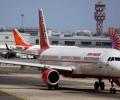
This is a third of Rs 33,992 crore debt that was to be passed on to the new owner during last year's failed divestment process.

Air India owns 32 aircraft, and has 37 aircraft on finance lease; Air India Express owns 17 aircraft on finance lease. The aircraft-related debt of Air India is Rs 16,000 crore; it's Rs 1,100 crore for Air India Express.

'The business continuity clause will mean the Tatas will have to keep running the airline for three years, and cannot exit the flying business.'

After Operation Sindoor, the Army and Navy now view the IAF as not a supporting arm, but the spearhead of India's warfighting capability, capable of decisive outcomes across domains, explains Air Commodore Nitin Sathe (retd).

The court said if employees continue to hold on to flats then Air India Asset Holding Company would not be able to monetize the land to reduce the burden of Air India's debt.
Another reason working in Air India's favour now is the government's plan to clean up part of the airline's burgeoning debt from its books - a major deterrent for investors when it attempted divestment the previous time.

Airline told to transfer non-core assets, subsidiaries to special purpose vehicle

India's largest public sector bank State Bank of India (SBI) will support Tata group's bid for soon-to-be-privatised Air India by subscribing to Tata Sons debentures or funding the special purpose vehicle (SPV) set up by Tata Sons for the acquisition. Bankers said the credit rating of Tata group's holding company is "AAA" signifying high safety and a combination of Air India with its existing airline businesses would make it a formidable player - leading to a duopoly market with IndiGo. It would also open many business opportunities, including in the retail segment, an official said.

The MiG-21's sharp silhouette and supersonic roar will live on in the memories of those who flew it, those who maintained it, and those who watched it streak across the sky as a symbol of India's strength, asserts IAF veteran Air Commodore Nitin Sathe (retd).

Last fortnight, State Bank of India Chairman C S Setty lifted the veil on a subject long spoken of in corporate corridors: Why can't our banks finance mergers and acquisitions (M&As)? Change is in the air: Indian Banks' Association (of which Setty is the chairman) is to "make a formal request" to Mint Road to make way for it. Thus far the exclusive turf of foreign banks even though its funding remains offshore - as in, it's not on these entities rupee-book (and a few select shadow banks) - a most lucrative segment in the investment banking suite, M&As, will be homeward-bound.

It is Air India's only profitable subsidiary. In 2016-17, it clocked a profit of over Rs 33.4 crore, earning Rs 620 crore in revenues from its handling operations.
'For weeks, months and years, it would continue to be debated if India should have pushed the early advantage and decapacitated Pakistan militarily.' 'India refused to bite the provocatively proverbial bullet and escalate it into a full-fledged war,' notes N Sathiya Moorthy.

The Union government has no 'Buy India' policy, but has a 'Buy Air India' policy.

With general elections on the horizon, the government's privatisation bandwagon has almost but stalled as a government wary of being accused of selling family silver opts for minority stake sales on stock exchanges over outright privatisation. The result -- the divestment target for current fiscal year is again likely to be missed. Big ticket privatisation plans such as that of Bharat Petroleum Corporation Ltd (BPCL), Shipping Corporation of India (SCI) and CONCOR are already on the backburner and analysts feel meaningful privatisation can happen only after April/May general elections.

'With continued focus on votes, upcoming by-polls and purchasing politicians, the political hierarchy has little time for national defence.' 'They would do well to heed a veteran scholar, who says, "There will be war with China in the next few years. The next full scale war will have the involvement of Pakistan and terror elements, insurgents and intelligence assets operating inside India",' warns Lieutenant General Prakash Katoch (retd).

'Inter-ministerial coordination, information on the proposed PSUs, and due diligence are taking longer than expected to conclude the process.'

It seems in the geopolitics of the 21st century, we can see the subcontinent acting as one geopolitical entity to secure its economic interests. Key to this transformation is a strong India that is pre-eminent but not dominant, notes Colonel Anil A Athale (retd).

'I think some of us, like Mukesh Ambani, myself and those of us who head industrial units, ought to really focus on what we can really do to make the world a safer place, maybe 50 or 100 years from now.' 'For instance, how can we deal with climate change and global warming, right now?' 'The effects of it may not be felt now; in fact, we may pay a price for it today, but it will help the generations to follow.'
The Chinese fighter aircraft activities took place from its bases including the Hotan, Gar Gunsa and Kashgar airfields which have been upgraded recently to enable operations by all types of fighters along with concrete structures to hide away the presence of the number of fighters present at its different airbases, the sources said.

'The sky is the limit for what all could be done at an air base to neutralise terrorists. Good proactive local leadership and delegated operational effort would be key to ensuring that a handful of terrorists cannot hold a whole air base, and by extension, the whole nation to ransom,' says Group Captain P I Muralidharan (retd).

With cash shortage and plans going awry, the AirAsia owner is looking to cash out of the venture he built with Ratan Tata in 2013.
'Our strategy should be to 'hold the line' in the north on the Sino-Indian land frontier, but maintain and, if possible, enlarge India's current edge in the maritime south.'

Hotel companies, which have experienced substantial share price gains in the past six months, are not only expected to post robust revenue growth in the seasonally weak July-September quarter (second quarter, or Q2) of 2023-24 (FY24), with the trend continuing in the second half (H2) of FY24, but according to some analysts, they will also benefit from a structural uptrend in progress. To begin with, larger players in the listed hotel sector are expected to report strong growth in Q2 compared to the year-ago quarter. Led by higher demand from the business segment, the sector is expected to achieve a growth rate of 15-30 per cent.

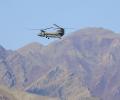
'An armed helicopter equipped with counter-drone systems will provide the airborne counter-drone capability and flexibility needed to protect India's critical assets.'

Ace investor Rakesh Jhunjhunwala on Thursday said real estate developers are afflicted with very low return on capital as compared to bluechip stocks. Jhunjhunwala, who runs RARE Enterprises and is set to be a major shareholder in an upcoming airliner, said only the affordable housing developers can look at listing because of the volumes which they can deliver. It can be noted that very few developers like Macrotech Developers formerly Lodha, and DLF are listed on the bourses. Jhunjhunwala cited the case of DLF, saying the stock price plummeted to Rs 80 from Rs 1,300 per piece to illustrate the risks associated.

Indian batters need to try and play him 'straight'

'The government has realised that the finances of the government are in a precarious state.' 'We are borrowing to fund the ever-burgeoning revenue deficit.' 'Then you are paying interest on the fresh borrowing.' 'For the first time, the government has realised that this cannot go on.'

'Allocate some parts of one's surplus income towards cryptocurrencies, considering the immense growth potential of this emerging asset class.'

'Drone warfare has come to stay.' 'India should exploit the expected Reaper acquisition from the US to build an effective counter terror campaign,' argues Group Captain Murli Menon (retd).

Mere shuffling of resources or cosmetic changes to prove a point would be counterproductive in the long run, observes Commodore Venugoptal Menon (retd).

Overall, the People's Liberation Army Air Force (PLAAF) has focused on building ground-based air defense networks and network-centric operations rather than trying to match the Indian Air Force (IAF) in terms of straight fighter numbers along the border. All air assets fall under the Western Theater Command of the PLA, the largest geographic region of China's five military theater commands.

It came as a surprise to all stakeholders - competing telecom companies (telcos), most analysts and even the government's internal projections on revenues from the 5G auctions. Reliance Jio disrupted all calculations by paying a stiff Rs 40,000 crore to buy 10 MHz of spectrum in the 700-MHz band, globally considered a key band for efficient 5G service coverage, along with the default 3.5 GHz band and the ultra-high speed and low-latency millimetre band of 26 GHz band. So what made Jio pay almost 45 per cent of its total spend in this auction for the 700 MHz band - much more than what it rustled up even for the 3.5 GHz band?
 © 2026 Rediff.com - Advertise with us - Disclaimer - Privacy Policy - Sitemap - Feedback - About us - Terms of use - Grievances